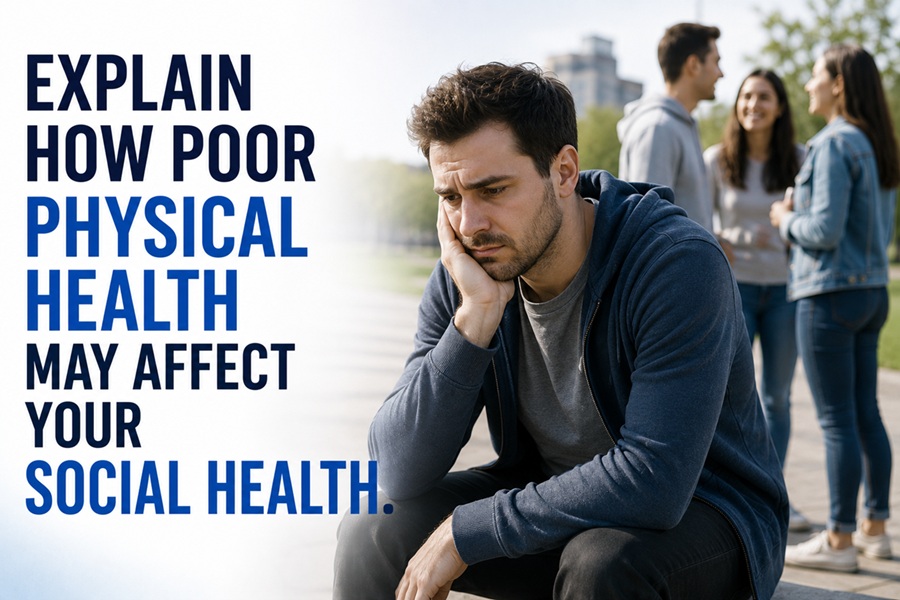

Poor physical health can weaken your social health by making it harder to show up for the people in your life. Pain, fatigue, limited mobility, and the demands of managing an illness all reduce your capacity to socialize, and over time that shrinking contact can turn into genuine isolation. Physical symptoms can also lower mood and self-esteem, which makes people withdraw further, even from relationships they value.
This matters because physical and social health are two of the six interconnected dimensions of wellness, and neither operates alone. The connection also runs in a loop rather than a straight line, since social isolation then harms physical health right back, raising the risk of serious conditions. Understanding how the cycle works is what makes it possible to interrupt it. Here is exactly how poor physical health reaches into your social life, and what helps.
The Physical and Social Health Link at a Glance
| Question | Answer |
|---|---|
| Does physical health affect social health? | Yes, directly and significantly |
| Main pathways | Fatigue, pain, mobility limits, mood, time demands |
| The result | Fewer interactions, then isolation |
| Does it work both ways? | Yes, isolation harms physical health too |
| Why it matters | The two dimensions reinforce each other |
| Can the cycle be broken? | Yes, with small, deliberate steps |
How the Connection Works
The chain is simple to follow. Poor physical health reduces your ability and desire to engage with others, that reduced engagement shrinks your social network, and a shrunken network leaves you with less support at exactly the moment you need it most.
The Physical and Social Health Cycle
Low Mood & Time Spent on Care
Fatigue Leaves Nothing in the Tank
Fatigue is one of the most underestimated social barriers. Chronic illness, poor sleep, pain, and recovery all drain energy, and socializing genuinely takes energy. Conversation, getting ready, travel, and simply being present all cost something.
When your reserves are low, invitations start getting declined, not out of disinterest but out of depletion. The trouble is that friends may read repeated cancellations as rejection, and invitations gradually stop coming. That is how a physical symptom quietly becomes a social loss.
Pain and Mobility Limit Where You Can Go
Physical limitations narrow the map of your life. If walking hurts, stairs are hard, or you cannot drive, then a huge share of ordinary social life becomes difficult or impossible.
| Physical limitation | Social effect |
|---|---|
| Chronic pain | Events become something to endure, not enjoy |
| Reduced mobility | Venues and travel become barriers |
| Loss of driving | Dependence on others, fewer spontaneous outings |
| Hearing or vision loss | Group conversation becomes exhausting |
| Fatigue | Declining invitations becomes a habit |
Hearing loss deserves a specific mention, because it is so often overlooked. When following a group conversation takes constant effort, people frequently withdraw from the gatherings they used to love, not because they stopped caring but because participation stopped being possible.
Mood, Self-Esteem, and Withdrawal
Poor physical health does not just limit what you can do. It changes how you feel about yourself. Illness, weight changes, visible symptoms, or losing abilities you once had can dent self-esteem and trigger embarrassment.
That often leads to a quiet, voluntary withdrawal. People stop going out because they do not want to be seen struggling, do not want to be a burden, or do not want to explain their condition again. Low mood compounds it, since depression and anxiety, which commonly accompany chronic illness, both push toward isolation.
The Time and Energy Illness Demands
Managing a serious health condition is close to a part-time job. Appointments, treatments, medications, therapy, and recovery consume hours and mental bandwidth that used to go elsewhere.
Caregiving does the same to the people around you. When a household is absorbed in managing an illness, social plans are the first thing cut, and that is true for the patient and the family alike. Nobody chooses it. It is simply what is left after the necessities are handled.
The Cycle Runs Both Ways
Here is what makes this more than an inconvenience. Social isolation is not just a side effect of poor physical health. It is itself a serious risk factor for poor physical health.
According to the Centers for Disease Control and Prevention, high-quality relationships help people live longer, healthier lives, and social connection can reduce the risk of chronic disease and serious illness. Research summarized by public health agencies has linked social isolation and loneliness to roughly a 29 percent higher risk of heart disease and a 32 percent higher risk of stroke, along with about a 50 percent increased risk of dementia in older adults. Lacking social connection has been associated with a substantially higher risk of premature death.
So the loop closes. Poor physical health drives isolation, and isolation drives worse physical health. That is precisely why intervening early matters so much.
Who Is Most at Risk
Anyone can land in this cycle, but a few situations raise the odds.
- Older adults, who more often face chronic illness, hearing loss, living alone, and losing friends.
- People with chronic conditions that demand ongoing treatment and restrict daily routines.
- Anyone recovering from major surgery or injury, especially during a long rehabilitation.
- People with limited mobility or without reliable transportation.
- Those managing conditions that carry visible symptoms or social stigma.
How to Protect Your Social Health
The good news is that the cycle can be interrupted, and it does not require becoming a different person. Small, deliberate choices do most of the work.
- Tell people what is going on, so cancellations are understood rather than read as rejection.
- Adapt the activity instead of skipping it, swapping a long outing for a short coffee or a phone call.
- Use video and messaging when leaving the house is not realistic, since imperfect contact beats none.
- Treat social contact as part of your treatment plan, not a luxury for after you feel better.
- Look into support groups, where you meet people who already understand the condition.
- Address the physical barrier directly where you can, whether that is a hearing aid, pain management, or a mobility aid.
If mood is the thing keeping you home, that is worth naming to a doctor. Depression and anxiety are treatable, and treating them often reopens the social door on its own.
Where This Fits in the Bigger Picture
This connection is a textbook example of why health is understood as a set of interconnected dimensions rather than one number on a chart. Physical and social health are two of those dimensions, and our guide to the six dimensions of health and wellness explains how the rest fit together.
The practical takeaway is that caring for your body is also caring for your relationships, and staying connected is a legitimate part of protecting your physical health. This is general information rather than medical advice, so talk with a doctor about your own situation.
Frequently Asked Questions
How does poor physical health affect social health?
It reduces your energy, mobility, and mood, which makes socializing harder and leads to fewer interactions. Over time, that can shrink your support network into genuine isolation.
Can being physically unwell make you lonely?
Yes. Fatigue, pain, embarrassment, and the time demands of treatment all push people to withdraw, and repeated withdrawal often leads to loneliness even when relationships still exist.
Does social isolation affect physical health too?
Yes, and significantly. Public health research links isolation and loneliness to higher risks of heart disease, stroke, dementia, and premature death, which is why the two dimensions form a cycle.
Why do people with chronic illness withdraw from friends?
Usually a mix of low energy, unpredictable symptoms, not wanting to be a burden, and the sheer time that managing a condition takes. It is rarely a lack of interest in the friendship.
How can I stay socially connected while managing an illness?
Be honest with people about your limits, shorten and adapt plans rather than cancelling, use calls and video on hard days, and treat social contact as part of your care rather than an extra.
Is loneliness from illness treatable?
It responds well to deliberate action, including support groups, addressing physical barriers like hearing or pain, and treating any accompanying depression or anxiety with professional help.