
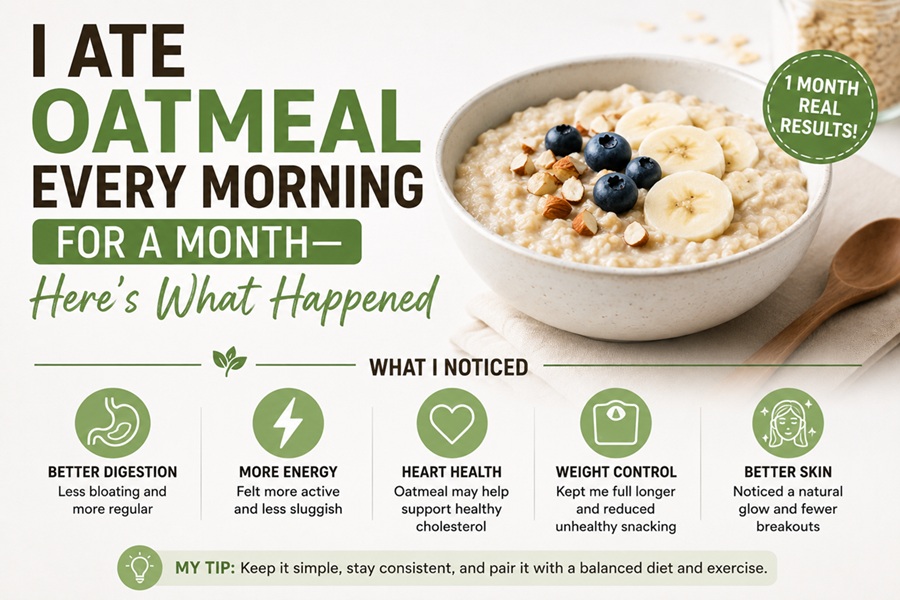

If you eat oatmeal every morning for a month, the changes you are most likely to notice are lower cholesterol, steadier energy and blood sugar, feeling fuller for longer, and smoother digestion. These effects come down to one star ingredient in oats, a soluble fiber called beta-glucan, which is backed by decades of research and even an official heart-health claim from the FDA. For a cheap, humble breakfast, oatmeal punches well above its weight.
A quick word on honesty before we dig in. Rather than inventing a day-by-day diary, this article lays out what actually tends to happen based on nutrition science, because results vary from person to person and depend heavily on how you make your bowl. A plain oatmeal with fruit is a very different food from a sugary instant packet. With that in mind, here is what a month of daily oatmeal realistically does to your body, week by week, and the one big catch to watch for.
What to Expect at a Glance
| Change | What happens |
|---|---|
| Cholesterol | LDL, the “bad” cholesterol, may drop |
| Blood sugar | Steadier levels, fewer crashes |
| Fullness | You feel satisfied longer |
| Weight | May support modest weight management |
| Digestion | More regular, better gut health |
| Energy | Steadier morning energy |
Why Oatmeal Is So Good for You
The magic ingredient is beta-glucan, a soluble fiber that turns gel-like in your gut. As it moves through your digestive tract, it traps bile acids, which are rich in cholesterol, and carries them out of the body. To make more bile, your liver pulls cholesterol from your bloodstream, and your LDL level falls as a result.
Beyond that fiber, oats bring complex carbohydrates for slow-burning energy, plant protein, and a solid dose of minerals and antioxidants. It is this combination, not any single nutrient, that makes a daily bowl so effective.
What Happens Week by Week
The benefits build gradually, so a month is a meaningful window to notice real change. Here is a general sense of how it unfolds.
Week 1
Your body begins adjusting to more fiber.
Week 2
Energy often becomes steadier.
Week 3
The habit starts feeling natural.
Week 4
Long-term heart-health benefits begin.
Week 1
What many people notice:
You may feel fuller through the morning because oatmeal digests slowly. As fiber intake increases, some people also notice mild bloating or extra gas while the digestive system adapts.
Week 2
What may be happening:
Steadier blood sugar levels can help reduce mid-morning hunger and energy crashes, making breakfast feel more satisfying.
Week 3
What many people notice:
Digestion often becomes more regular, and eating oatmeal each morning begins to feel like an easy routine.
Week 4
What nutrition research suggests:
With consistent intake, the soluble fiber beta-glucan in oats may begin contributing to improved cholesterol levels as part of an overall heart-healthy diet.
Your Cholesterol May Drop
This is the most researched benefit, and the evidence is strong. Studies generally show that daily oat fiber can lower total and LDL cholesterol by around 4 to 10 percent, which is meaningful even if it is gentler than medication. The effect is real enough that the FDA authorized a heart-health claim back in 1997.
The science keeps reinforcing it. According to reporting reviewed by Medical News Today, a 2026 University of Bonn study found that even a short, intensive oat-based plan lowered harmful LDL cholesterol by about 10 percent in people with metabolic syndrome, with the improvement still visible six weeks later. There is one honest catch on the numbers. A single cup of cooked oatmeal has only about 2 grams of beta-glucan, while the target for cholesterol benefit is about 3 grams a day. A slightly bigger bowl, or a spoonful of oat bran stirred in, closes that gap.
Steadier Blood Sugar and Energy
Because that same soluble fiber slows digestion, it also slows how quickly sugar enters your bloodstream. Instead of the spike and crash you get from a pastry or sugary cereal, oatmeal gives you a gentler, more sustained release of energy.
Over a month, many people notice fewer mid-morning energy dips and cravings. That steadier blood sugar is part of why oatmeal is often recommended for people managing their weight or their glucose, though the type of oats and toppings matter a great deal, as we will see.
You Feel Fuller and May Eat Less
Oatmeal is genuinely filling. The fiber keeps food in your stomach longer and helps you feel satisfied, so you are less likely to be hungry an hour later. Compared with refined breakfast foods, that staying power is a real advantage.
This satiety is why oatmeal can support modest weight management. In the Bonn study, the oat group even lost about 4.4 pounds on average, though it is worth being clear that participants were also eating fewer calories overall. Oatmeal helps by curbing hunger, not by melting away weight on its own.
Better Digestion and Gut Health
The fiber in oats does good work lower down too. It adds bulk and supports regularity, and beta-glucan acts as a prebiotic, feeding the beneficial bacteria in your gut. Researchers increasingly link those gut microbes to some of oats’ broader health benefits, including the cholesterol effect.
One honest heads-up for week one. If you are not used to much fiber, suddenly eating oatmeal daily can cause temporary bloating or gas. The fix is simple: start with a smaller portion and build up gradually, and drink plenty of water.
A Steady Nutrient Boost
Beyond fiber, a daily bowl quietly delivers a range of nutrients your body needs. Oats are a good source of several minerals and beneficial plant compounds.
| Nutrient | Why it matters |
|---|---|
| Manganese | Supports metabolism and bone health |
| Magnesium | Aids muscle and nerve function |
| Iron | Helps carry oxygen in the blood |
| B vitamins | Support energy production |
| Avenanthramides | Antioxidants unique to oats |
Getting a small, steady supply of these every morning adds up over a month and complements a balanced diet.
The Catch: How You Make It Matters
Here is the part that decides whether your month of oatmeal helps or backfires. The oatmeal itself is healthy, but what you add can erase the benefits. Flavored instant packets are often loaded with added sugar, and piling on brown sugar, syrup, or honey turns a heart-healthy meal into a sugary one that can spike your blood sugar.
To keep the benefits, a few choices make all the difference.
- Choose plain rolled or steel-cut oats over sweetened instant packets.
- Sweeten with fruit instead of sugar, and add nuts or seeds for protein and healthy fats.
- Watch your portion and toppings, since calories from add-ins add up.
- Remember that oatmeal is a lever, not a cure, and works best within an overall healthy diet.
Who Should Be Cautious
Oatmeal suits most people, but a few notes are worth keeping in mind. If you have diabetes or blood sugar concerns, favor less-processed oats and skip the added sugar, since heavily processed or sweetened versions can still cause spikes. If you have celiac disease or gluten sensitivity, choose oats certified gluten-free, since cross-contamination is common.
And importantly, oatmeal supports health but does not replace medical treatment. If you are managing high cholesterol or another condition, keep taking prescribed medication and talk to your doctor rather than relying on breakfast alone. This is general nutrition information, not medical advice for your situation.
Realistic Expectations After One Month
So what can you honestly expect after 30 days? Likely a fuller, more even-energy morning routine, better digestion, and, if you keep your beta-glucan up and your sugar down, the beginnings of a measurable dip in cholesterol. What you should not expect is a dramatic transformation from one food alone.
The real power of oatmeal is consistency as part of a bigger picture. It works best alongside other healthy habits, and pairing a healthy breakfast with regular exercise gives you far more than either does on its own. A month of oatmeal is a genuinely good habit to build, just with realistic eyes about what breakfast can and cannot do.
Frequently Asked Questions
What happens if I eat oatmeal every day for a month?
You may see lower LDL cholesterol, steadier blood sugar and energy, greater fullness, and more regular digestion, thanks to oats’ soluble fiber. Results vary and depend on how you prepare it.
Does oatmeal really lower cholesterol?
Yes. Its beta-glucan fiber helps remove cholesterol from the body, and studies show daily oat fiber can lower LDL by roughly 4 to 10 percent as part of a healthy diet.
Will eating oatmeal every day help me lose weight?
It can support weight management by keeping you full and reducing snacking, but it is not a weight-loss food on its own. Portion size and toppings matter a lot.
What is the healthiest way to eat oatmeal?
Choose plain rolled or steel-cut oats, sweeten with fruit rather than sugar, and add nuts or seeds. Avoid sugary instant packets, which can cancel out the benefits.
Can oatmeal cause bloating?
It can at first, especially if you increase fiber quickly. Starting with a smaller portion, building up gradually, and drinking water usually settles it within the first week or two.
How much oatmeal should I eat for the cholesterol benefit?
Aim for about 3 grams of beta-glucan a day, roughly a generous bowl of oats. Adding a spoonful of oat bran helps you reach that target.