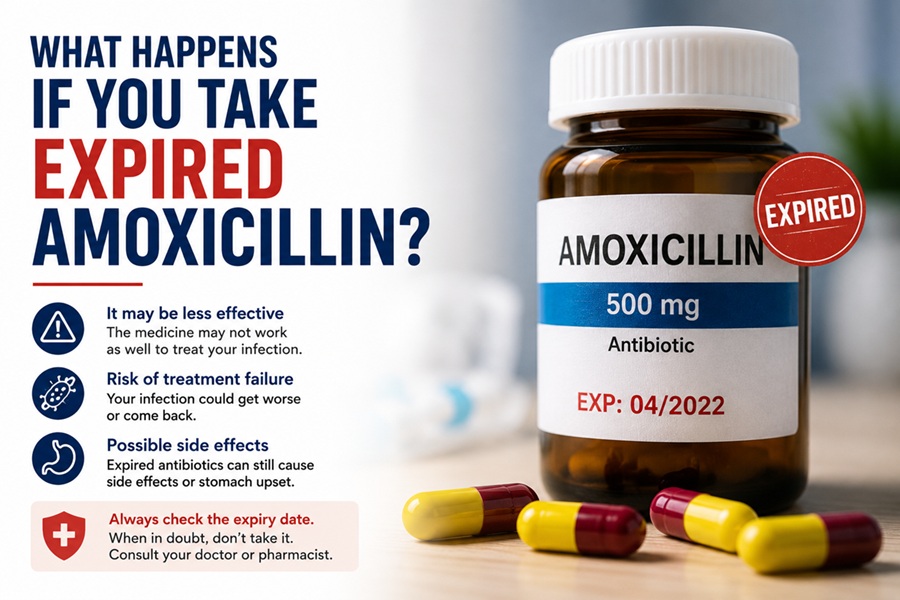

If you take expired amoxicillin, the most likely thing that happens is that it does not work as well as it should, because the drug loses potency over time. It is not considered toxic, so a dose of expired amoxicillin is unlikely to poison you. The real problem is effectiveness. A weakened antibiotic may fail to fully clear a bacterial infection, and using an under-strength antibiotic can contribute to antibiotic resistance, which is a genuine public health concern.
There is one important exception to keep front of mind. Liquid amoxicillin, the kind mixed into a suspension, is far more perishable than capsules or tablets and should never be used once it is past its short shelf life. Bottom line, you should not take expired amoxicillin. Instead of gambling on a medicine that may not work, the safe move is to get a fresh prescription. Here is exactly what happens, why the form matters so much, and what to do instead.
Expired Amoxicillin at a Glance
| Question | Answer |
|---|---|
| Is it toxic if expired? | Generally no, not poisonous |
| What is the main risk? | Lost potency and treatment failure |
| Bigger concern? | Antibiotic resistance |
| Which form is riskier? | Liquid suspension |
| Liquid shelf life | About 7 to 14 days once mixed |
| Pill shelf life | Around 1 to 3 years |
| Should you take it? | No, get a fresh prescription |
What Actually Happens When You Take It
The active ingredient in amoxicillin gradually breaks down over time. Its bacteria-fighting structure, a chemical ring called the beta-lactam ring, deteriorates when exposed to moisture, heat, and light. As it degrades, the drug simply becomes less able to do its job.
So the realistic outcome of taking an expired dose is not a dramatic reaction. It is an underwhelming one. The medicine may partly work, barely work, or not work, and you often cannot tell how much potency is left, because you cannot judge degradation by sight or smell. For a headache pill, weak is merely disappointing. For an antibiotic fighting an active infection, weak can be a real problem.
Why Lost Potency Matters So Much With Antibiotics
Antibiotics are a special case where reduced strength is more than an inconvenience. To clear an infection, an antibiotic needs to hit the bacteria hard enough and long enough to kill them off. An under-strength dose can leave some bacteria alive.
Those surviving bacteria are the ones most able to withstand the drug, and they can multiply into a tougher, more resistant infection. This is how incomplete or under-dosed antibiotic use fuels antibiotic resistance, one of the biggest challenges in modern medicine. In short, a half-working antibiotic can be worse than no antibiotic at all in terms of long-term consequences.
Is Expired Amoxicillin Dangerous or Toxic?
Here is the reassuring part, stated carefully. Expired amoxicillin is not generally considered toxic, and taking a dose is not expected to cause poisoning. Much of the fear around expired drugs traces back to old reports involving a different antibiotic, tetracycline, which was once linked to kidney damage when degraded. That risk is considered rare even with modern tetracycline, and it does not apply to amoxicillin.
A few honest caveats remain. If you are allergic to amoxicillin, an expired dose can still trigger that allergy. And degraded medicine, especially liquid that may be contaminated, could cause stomach upset or other unwanted effects. The takeaway is not that expired amoxicillin is scary, but that it is unreliable, which is reason enough to skip it.
Capsules vs Liquid: A Big Difference
Not all amoxicillin ages the same way, and this is the single most important practical point. The form dramatically changes how long the medicine lasts.
Capsules and tablets are solid and stable, lasting roughly one to three years from manufacture when stored properly. Liquid amoxicillin is another story. Because it is powder mixed with water, it degrades quickly and can grow bacteria, since it often lacks preservatives. That is why pharmacists tell you to refrigerate it and discard it after about 7 to 14 days. Expired liquid amoxicillin should always be thrown out, never taken.
What the Expiration Date Really Means
The expiration date is not the exact moment a drug turns useless or harmful. It is the last day the manufacturer guarantees the medication retains its full potency, generally at least 90 percent, under proper storage.
Studies, including a well-known military stability program, have found that many solid drugs stay potent well beyond their printed dates when stored in ideal conditions. That sounds encouraging, but it comes with big asterisks. Home storage is rarely ideal, once a bottle is opened or repackaged its stability can drop, and liquids are excluded from that reassurance entirely. According to Drugs.com, the FDA recommends never taking drugs beyond their expiration date, because too many unknown variables, from storage to the drug’s chemistry, affect whether it is still good.
Should You Ever Take Expired Amoxicillin?
The straightforward answer is no. The potential downside, an infection that does not clear and possible resistance, outweighs the small convenience of using what you already have.
There is a related mistake worth flagging. You should also not take leftover amoxicillin for a new infection, even if it is not expired. Antibiotics are prescribed for a specific infection at a specific dose, and self-treating with leftovers risks using the wrong drug or dose and, again, feeding resistance. In truth, if you finished a course as directed, you should not have leftovers at all.
What to Do Instead
If you think you need amoxicillin, the right path is quick and simple. Contact a healthcare provider or pharmacist, who can confirm whether you need an antibiotic and provide a fresh, full-strength prescription. If you are in Central Oregon and need to be seen, our guide to urgent care and finding a doctor at Summit Health covers your local options for getting evaluated and prescribed properly.
For the expired medicine you already have, dispose of it safely rather than keeping it around. The best option is a pharmacy take-back program or a local medication take-back event, which prevents accidental use and keeps drugs out of the water supply. Do not flush it unless the label specifically tells you to.
How to Store Amoxicillin Properly
Good storage is what actually protects potency, so it is worth doing right. For capsules and tablets, keep them in a cool, dry place in their original packaging, away from heat and humidity. Ironically, the bathroom cabinet is one of the worst spots, because shower steam adds moisture.
For liquid amoxicillin, refrigerate it as directed and use it within the short window your pharmacist gives you, then discard the rest. Proper storage will not make an expired drug safe to use, but it does help the medicine stay effective through its intended life. This article is general information, not medical advice, so check with a pharmacist or doctor about your specific situation.
Frequently Asked Questions
What happens if I accidentally take expired amoxicillin?
Most likely nothing dramatic. It is not considered toxic, but it may have lost potency and might not treat your infection effectively. Let your doctor know rather than relying on it.
Is expired amoxicillin poisonous?
No, it is not generally poisonous. The main risk is that it does not work well, not that it harms you, though an allergy or contaminated liquid could still cause problems.
How long does amoxicillin last?
Capsules and tablets last roughly one to three years from manufacture when stored properly. Liquid suspension lasts only about 7 to 14 days once mixed and must be refrigerated.
Can I take leftover amoxicillin for a new infection?
No. Antibiotics are prescribed for a specific infection and dose. Using leftovers risks the wrong treatment and contributes to antibiotic resistance, so see a provider first.
Why does liquid amoxicillin expire so fast?
Because it is powder mixed with water, which speeds chemical breakdown and allows bacteria to grow. That is why it needs refrigeration and must be discarded within a couple of weeks.
How should I dispose of expired amoxicillin?
Use a pharmacy take-back program or a local medication take-back event. Avoid flushing it unless the label specifically instructs you to.